Sliding Doors vs Bifold Doors: Which Adds More Value To Your Home?
If you’re planning a renovation or extension, few decisions feel as visually important as choosing the right doors to open up your home to the garden. Sliding doors and bifold doors both promise that desirable “indoor-outdoor living” feel, but they do it in very different ways.
And while most people think of this choice as purely aesthetic, it actually has a real impact on perceived property value, buyer interest, and long-term appeal. The tricky part is that “value” doesn’t always mean resale price alone—it also includes how a space feels, how usable it is day-to-day, and how future-proof the design will seem to buyers.
So which option really adds more value? The honest answer: it depends on what kind of value you care about. Let’s break it down properly.
Buyer Appeal Trends
Right now, both sliding doors and bifold doors are considered desirable features in UK homes, especially in extensions and renovated properties. Buyers expect some form of large opening between kitchen or living spaces and the garden.
That said, trends do shift slightly depending on buyer type.
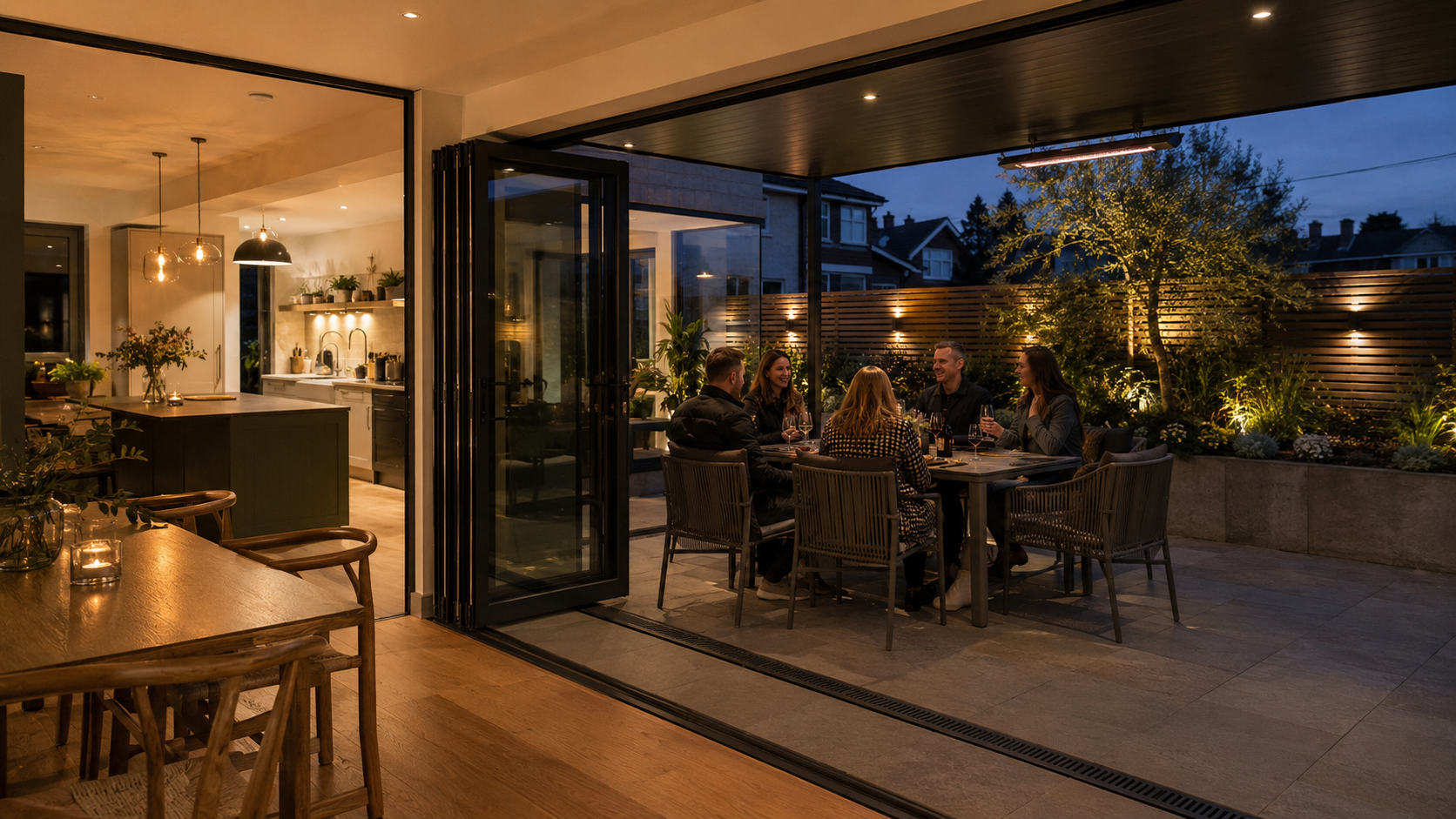
Bifold doors tend to appeal to buyers who prioritise flexibility and “wow factor.” The ability to fully open an entire wall is still a strong emotional selling point. It feels dramatic, sociable, and ideal for summer entertaining.
Sliding doors, on the other hand, are increasingly popular with design-conscious buyers who prefer clean lines, minimal framing, and uninterrupted views. They’re often associated with more contemporary, high-end architecture.
In short:
- Bifolds = lifestyle + flexibility
- Sliders = design + sophistication
Both are attractive, just to slightly different audiences.
Visual Impact
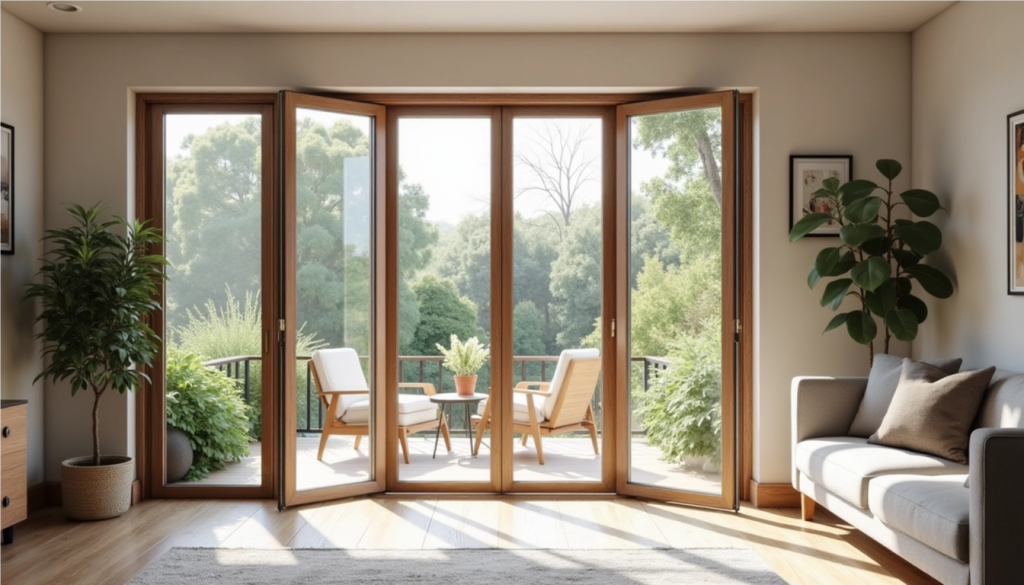
Visually, bifold doors make a statement. When fully opened, they create a wide, unobstructed connection to the garden. It’s easy to see why they’re often described as “opening the whole wall.”
However, when closed, bifold doors still have multiple visible frames and panels. Even modern slimline systems divide the view into sections.
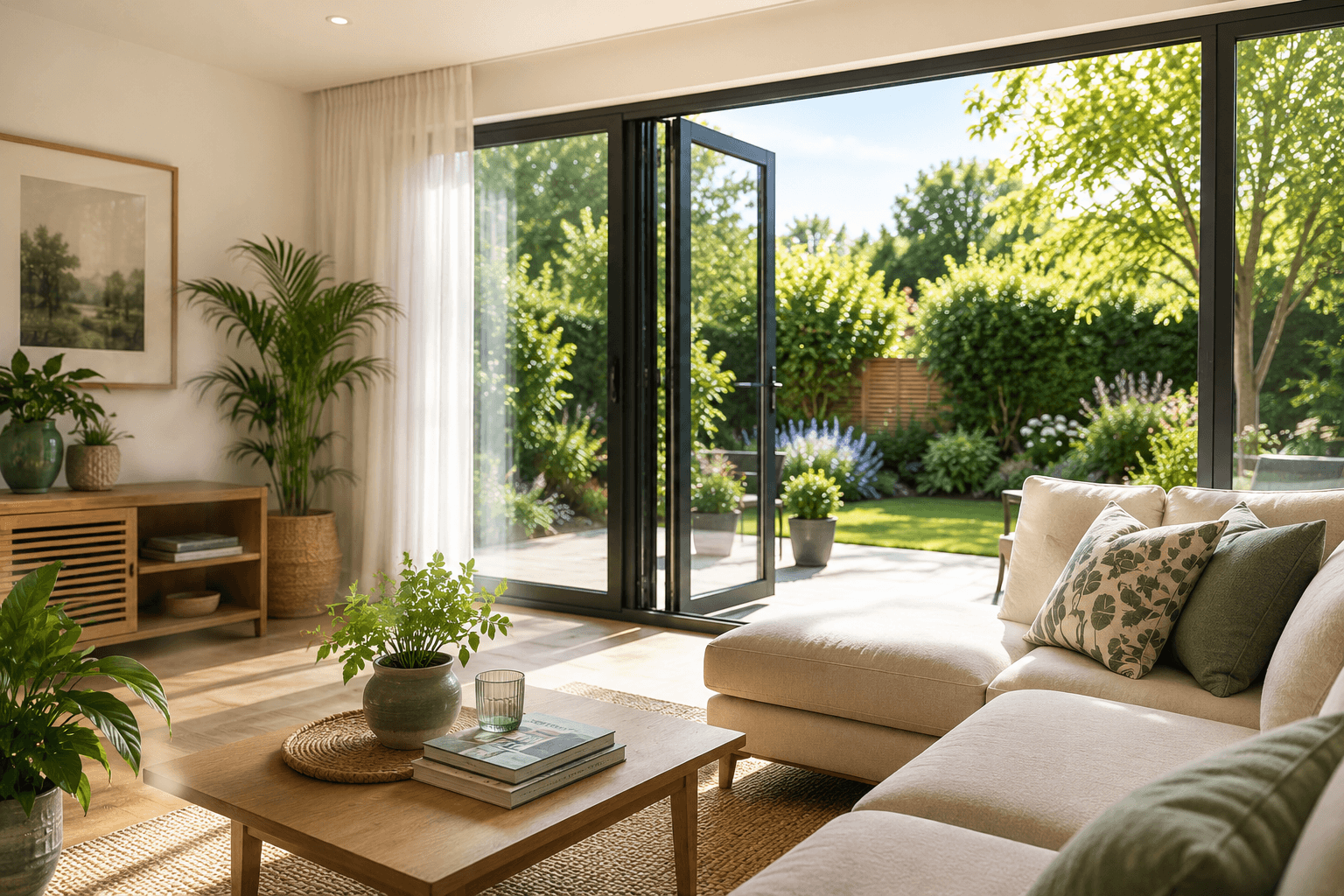
Sliding doors take a different approach. Instead of opening everything up, they prioritise large, uninterrupted glass panels. The result is a cleaner, more seamless look when the doors are shut.
From a pure design perspective, sliding doors often feel more minimal and architectural. Bifolds feel more dynamic and interactive.
So it becomes a question of preference: do you want maximum openness occasionally, or constant visual simplicity?
Space Efficiency
Space is where sliding doors often pull ahead.
Bifold doors need room to fold and stack, either internally or externally, depending on the system. This means part of the opening is always occupied when the doors are open.
Sliding doors don’t require that same clearance. Panels glide along a track and overlap, meaning you don’t lose usable space inside or outside the home.
This can make a big difference in smaller gardens or tighter layouts where every bit of space matters. It also makes furniture placement more flexible, since you don’t need to account for folded door stacks.
That said, bifolds do allow a completely open threshold, which sliding doors cannot fully replicate. So while sliders win on everyday practicality, bifolds still win on full opening experience.
Maintenance Considerations
From a maintenance perspective, sliding doors are generally simpler.
They have fewer moving parts exposed to wear and tear, and the mechanism is typically more enclosed within the frame. Regular cleaning of the tracks is usually the main requirement.
Bifold doors involve more hinges, rollers, and alignment points. Over time, these components may require adjustment to keep the doors running smoothly. In high-quality systems this isn’t a major issue, but it is something to be aware of.
In both cases, quality of installation matters just as much as the product itself. Poorly fitted doors of either type can lead to draughts, sticking, or long-term performance issues.
For homeowners thinking long-term value, ease of maintenance often translates into fewer future costs and fewer buyer concerns during resale.
Longevity
Both systems can last many years if properly specified and installed, but their wear patterns differ slightly.
Sliding doors tend to rely on track systems and rollers, which need to remain clean and aligned. High-quality systems are designed to handle heavy glass panels with minimal effort, but cheaper versions can degrade faster if not maintained.
Bifold doors rely more on hinges and folding mechanisms. These are durable when well-made, but naturally involve more points of movement, which means slightly more long-term servicing potential.
In terms of perceived longevity, buyers often associate sliding doors with “solid, fixed” construction, while bifolds can sometimes feel more mechanical. That perception can subtly influence value, even if both systems are technically reliable.
Resale Psychology
This is where things get interesting.
When buyers walk into a home, they’re not just assessing features—they’re imagining how the space will feel to live in.
Bifold doors often create an immediate emotional reaction. Fully opened, they signal summer living, entertaining, and a lifestyle-oriented home. For many buyers, that emotional impact is powerful and memorable.
Sliding doors create a different psychological effect. Instead of drama, they suggest calm, luxury, and simplicity. Large uninterrupted glass panels make rooms feel bigger and more expensive, even when nothing is open.
Estate agents often note that bifolds can be a “selling moment” during viewings, while sliding doors can contribute to a more consistent overall impression of quality.
In reality, both influence resale value—but in different ways:
- Bifolds help create emotional peaks during viewings
- Sliders elevate the perceived baseline quality of the home
When Value Isn’t Just Financial
It’s easy to frame this decision purely in terms of property value, but that only tells part of the story.
The real value of either system also comes from how you live with it day-to-day.
Bifold doors are fantastic if you love opening up your home completely in good weather and hosting social gatherings that spill into the garden. They make spaces feel dynamic and flexible.
Sliding doors are better if you want year-round usability, uninterrupted views, and a cleaner, more permanent connection to the outdoors without needing to physically open everything up.
There’s also the comfort factor. Sliding doors tend to be slightly better at sealing against wind and noise, while bifolds offer that unbeatable “open wall” experience in summer.
So the question becomes less about which adds more value, and more about which type of value matters most to you.
Final Thoughts
In purely financial terms, neither sliding nor bifold doors automatically guarantees a higher resale value. Both are considered desirable features in modern homes, and both can enhance property appeal significantly when chosen well.
Bifolds tend to win on emotional impact and lifestyle appeal. Sliding doors tend to win on design quality, space efficiency, and long-term refinement.
If you’re aiming to maximise broad buyer appeal, bifolds are often the safer all-round choice. If you’re aiming for a more premium, architectural feel, sliding doors can elevate a home’s perceived standard.
Ultimately, the best choice is the one that fits how you want your home to feel—not just how you want it to sell.
Categories: Uncategorised