Energy Efficiency And Modern Glazing: What Homeowners Need To Know
Upgrading your windows isn’t just about making a home look more modern or improving kerb appeal. For most homeowners, it’s really about comfort, running costs, and how efficiently the house holds onto heat in winter (and keeps it out in summer).
Glazing technology has come a long way in the last couple of decades. What used to be a simple choice between “single or double glazing” is now a much more technical decision involving U-values, coatings, thermal breaks, and energy ratings. The good news is you don’t need to be an engineer to make sense of it all—you just need a clear breakdown of what actually matters.
Let’s walk through the key things every homeowner should know before investing in modern glazing.
Understanding U-Values (Explained Simply)
If there’s one term that gets thrown around a lot in the glazing world, it’s U-value. And it sounds more complicated than it really is.
A U-value measures how much heat passes through a window. In simple terms: the lower the number, the better the insulation.
- Low U-value = better heat retention
- High U-value = more heat escaping
So, a modern energy-efficient window will have a low U-value, meaning it keeps warmth inside your home during colder months and reduces the amount of energy needed to heat your space.
Think of it like a jumper rating for your windows—the thicker and better designed it is, the less heat you lose.
Double vs Triple Glazing
Most homes in the UK now have double glazing as standard, but triple glazing is becoming more common, especially in new builds and energy-conscious renovations.
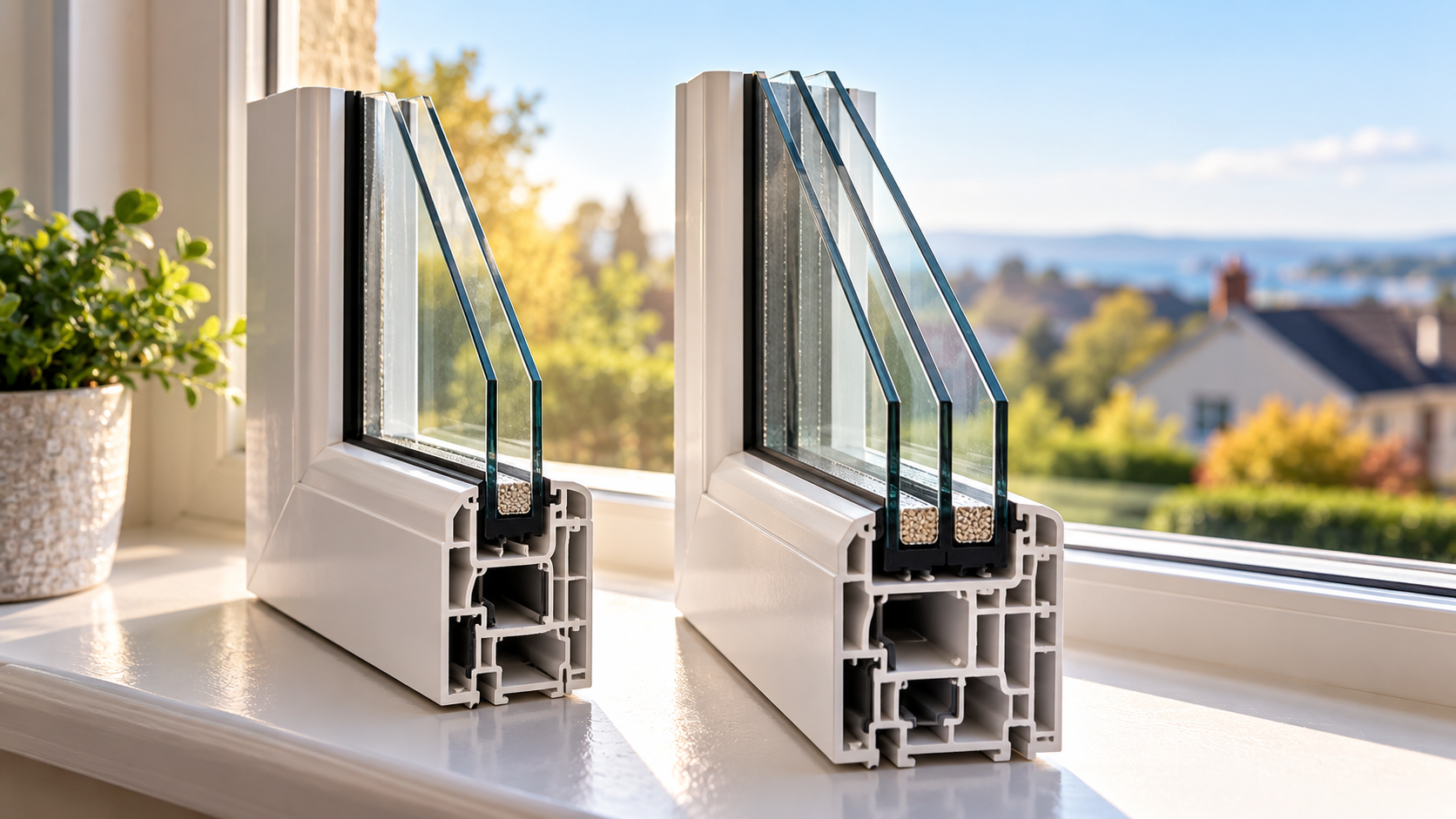
Double glazing consists of two panes of glass with a sealed gap in between, often filled with argon gas to improve insulation. It’s a huge step up from single glazing and still performs well in most homes.
Triple glazing adds a third pane of glass, creating two insulating gaps instead of one. This improves thermal performance even further and can significantly reduce heat loss.
However, it’s not always a straightforward upgrade. Triple glazing is heavier, more expensive, and doesn’t always deliver dramatic improvements in milder climates like much of the UK. In some cases, high-quality double glazing with advanced coatings can perform almost as well.
The key is balance—choosing the right level of insulation for your home rather than assuming “more glass equals better results”.
Thermal Breaks
Thermal breaks are one of those behind-the-scenes features that make a huge difference but rarely get talked about.
They are insulating barriers built into window frames, usually made from materials that don’t conduct heat easily. Their job is to stop cold or heat transferring directly through the frame itself.
Without thermal breaks, even the best glass can be let down by a frame that allows heat to escape. It’s a bit like having a well-insulated wall with a draughty door in the middle—it undermines the whole system.
Modern aluminium frames, in particular, rely heavily on thermal break technology to make them energy efficient, since metal naturally conducts heat more easily than other materials like uPVC or timber.
Solar Gain And Overheating
When people think about energy efficiency, they often focus only on keeping heat in. But in modern homes—especially those with large glass areas—managing heat from the sun is just as important.
This is where solar gain comes in. Solar gain refers to the amount of heat entering your home through the glass from sunlight.
In winter, this can actually be beneficial. Free heat from the sun can reduce heating bills. But in summer, or in south-facing rooms with large windows, it can lead to overheating.
Modern glazing often includes special coatings that help control this balance. These coatings allow light in while reducing excessive heat build-up, helping maintain a more comfortable indoor temperature year-round.
The goal isn’t to block sunlight—it’s to manage it intelligently.
Condensation Myths
Condensation is one of the most misunderstood aspects of windows.
Many homeowners assume that condensation on new windows means something is wrong with the glazing. In reality, it often means the opposite.
Condensation usually forms when warm, moist air hits a cold surface. With older single glazing, this happened constantly because the glass was very cold. Modern double and triple glazing keeps the inner pane much warmer, which actually reduces internal condensation significantly.
However, you might still see condensation on the outside of high-performance windows. This can actually be a good sign—it means the glass is doing such a good job of retaining heat inside your home that the outer surface stays cool enough for moisture to form outside.
So while condensation can be annoying, it’s not always a fault. In many cases, it’s just physics doing its job.
Government Efficiency Standards
In the UK, window performance isn’t just a matter of preference—there are clear standards that manufacturers must meet.
Modern glazing must comply with building regulations that set minimum energy efficiency requirements. These standards are designed to reduce carbon emissions and improve overall housing efficiency across the country.
Windows are typically rated using energy labels, similar to appliances. These ratings take into account U-values, solar gain, and overall performance.
For homeowners, this is useful because it gives a simple way to compare products. Instead of getting lost in technical specifications, you can look at the rating and quickly understand how efficient a window is.
It’s also worth noting that if you’re renovating or extending your home, your glazing choices may need to meet specific regulatory standards as part of planning or building control approval.
Long-Term Cost Savings
While energy-efficient glazing can feel like a significant upfront investment, the long-term savings often tell a different story.
Better insulation means your home loses less heat, which reduces how much you rely on central heating. Over time, this can lead to noticeable reductions in energy bills—especially in older properties where heat loss is a major issue.
There are also secondary savings to consider:
- Reduced strain on heating systems
- Fewer draught-proofing issues
- Improved property value
- Lower maintenance compared to older window systems
In many cases, homeowners find that upgraded glazing pays for itself gradually through reduced energy costs and improved comfort.
But beyond the financial side, there’s also the day-to-day experience. A well-insulated home feels more stable in temperature, quieter, and generally more comfortable to live in.
Final Thoughts
Modern glazing is about much more than just replacing old windows. It’s a combination of science, design, and practicality that directly affects how your home performs.
Understanding concepts like U-values, thermal breaks, and solar gain doesn’t need to be complicated. Once you strip away the jargon, it all comes down to a simple goal: keeping your home comfortable with as little wasted energy as possible. Whether you’re upgrading a single room or planning a full renovation, choosing the right glazing can make a noticeable difference—not just to your energy bills, but to how your home actually feels every day.
Categories: Uncategorised