How To Create A Seamless Kitchen-To-Garden Flow
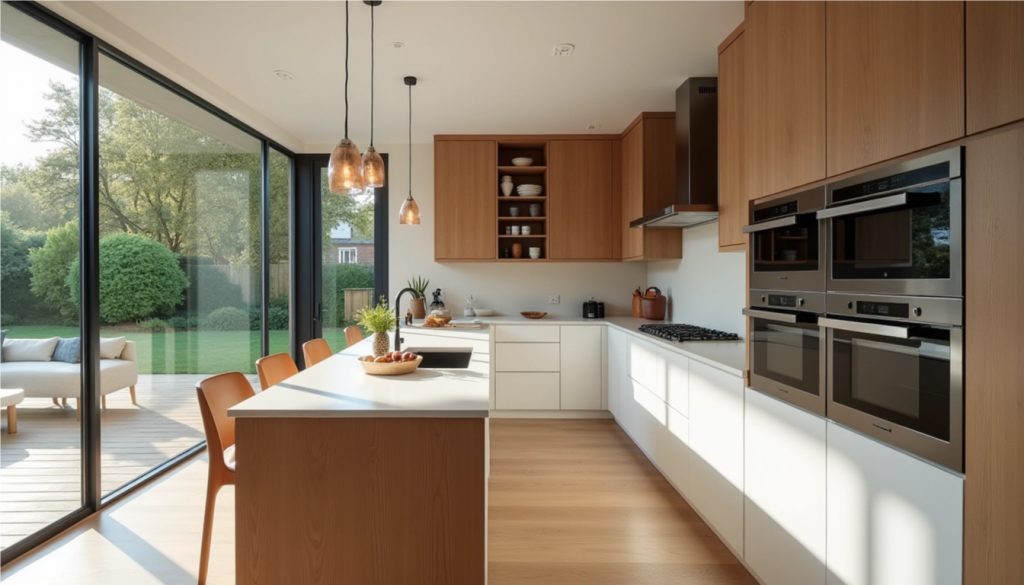
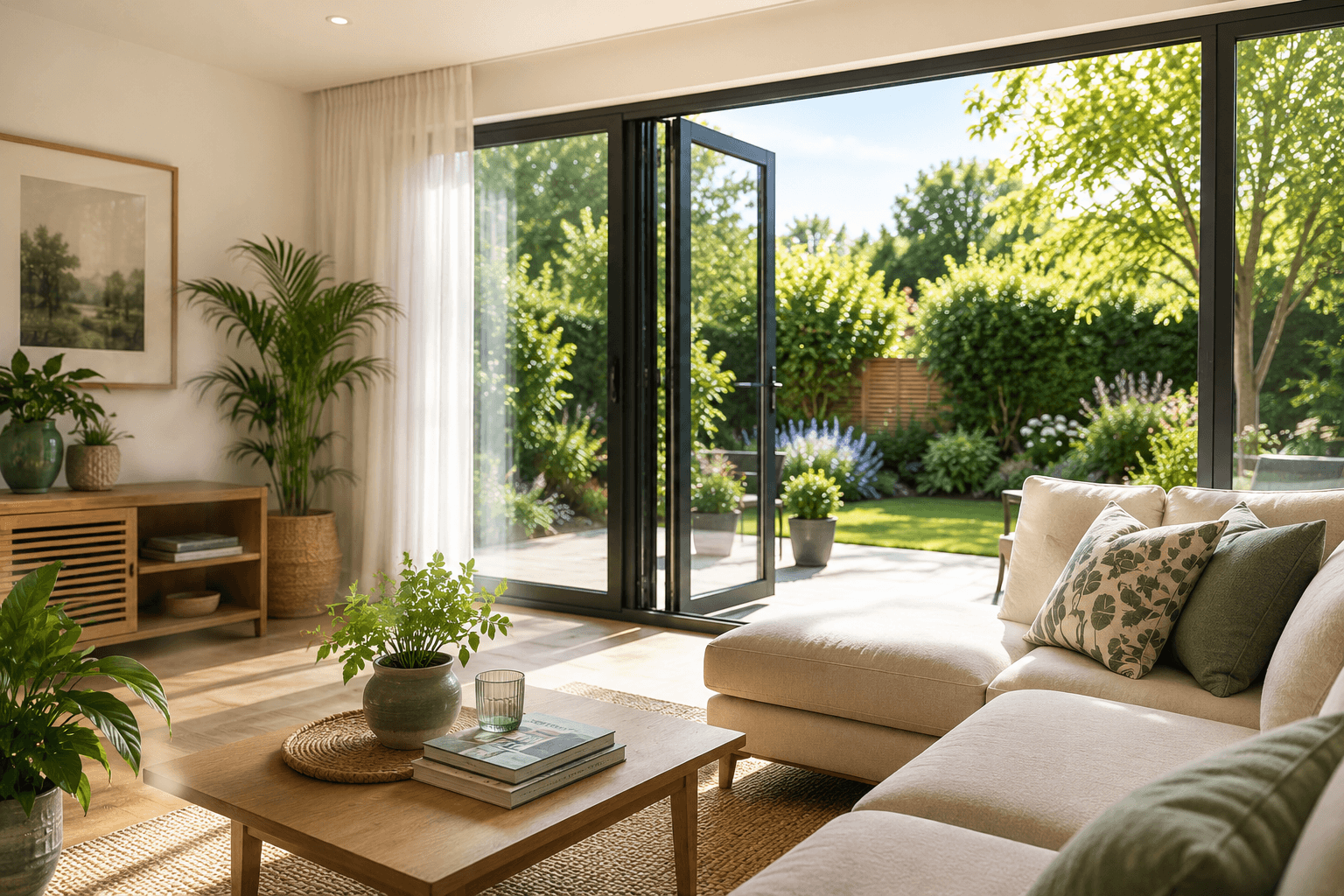
There’s something instantly appealing about a kitchen that doesn’t feel like it has a hard stop at the back wall. Instead, it just… continues. Light pours in, doors open wide, and suddenly the garden feels like part of the home rather than something you only visit when you remember to cut the grass.
This “indoor-outdoor flow” has become one of the most sought-after design features in modern homes, and for good reason. When done well, it changes how a space feels day-to-day. Cooking becomes more social, entertaining feels effortless, and even a quiet morning coffee feels a bit more special when you’re visually connected to greenery and fresh air.
So how do you actually get it right? Let’s break down the key elements that make a kitchen-to-garden transition feel natural rather than forced.
Why Kitchens Benefit Most From Garden Access
The kitchen is already the most active room in the home. It’s where people gather, chat, cook, and linger—often all at the same time. Because of that, it naturally benefits the most from a strong connection to outdoor space.
When a kitchen opens onto a garden, it does more than just improve aesthetics. It changes behaviour. Suddenly, hosting a barbecue doesn’t mean disappearing outside while everyone else stays indoors. Preparing food becomes part of the social experience. Kids drift in and out. Drinks and plates move freely. The whole home feels more connected.
There’s also a practical benefit: natural light. Kitchens that open onto gardens tend to feel brighter, more open, and less enclosed, even when doors are closed. That alone can make a huge difference to how enjoyable the space is to use.
Bifold Windows Over Sinks
One of the simplest but most effective ways to improve kitchen-to-garden flow is installing bifold windows over the sink area.
At first glance, it might not sound like a game changer. But in practice, it completely alters how you interact with the garden. Instead of staring at a wall while washing up, you get a direct view outside. Open them up and suddenly the kitchen counter becomes a serving hatch to the garden.
It’s especially effective in smaller homes where full-width bifold doors might not be possible. You still get that sense of openness and connection without needing to redesign the entire rear elevation.
It also helps with ventilation, which is something people often underestimate. Steam, cooking smells, and heat can all escape quickly, making the kitchen more comfortable during busy cooking sessions.
Corner-Opening Systems
If you want to take things a step further, corner-opening glazing systems are where things start to feel truly architectural.
These setups remove the corner post entirely, allowing two walls of glass to open up and essentially erase the boundary between inside and outside. When fully open, the kitchen feels like it extends straight into the garden without interruption.
It’s a particularly powerful option for open-plan kitchen-diner layouts, where you want a wide, unobstructed connection rather than a single doorway. It also works beautifully for homes that entertain frequently, as it creates a natural flow for guests moving between spaces.
That said, it’s not just about drama. Even when closed, large corner glazing floods the kitchen with light and gives uninterrupted views of the garden, which helps maintain that connection year-round.
Indoor-Outdoor Dining Layouts
A seamless kitchen-to-garden flow isn’t just about doors and glass—it’s also about how the space is used.
Positioning your dining area close to the garden access point is one of the most effective layout decisions you can make. It creates a natural bridge between cooking inside and eating outside.
For example, an indoor dining table placed directly next to sliding or bifold doors can easily “extend” into the garden when needed. On warmer days, food moves outside effortlessly. On colder days, the same space still feels connected thanks to the visual link.
Some homeowners even mirror their indoor and outdoor dining setups—similar table styles, aligned seating, and complementary materials. This creates a subtle sense of continuity that makes both spaces feel like part of the same design.
Flooring Transitions
Flooring plays a much bigger role in indoor-outdoor flow than people often realise. It’s one of the key visual cues your brain uses to understand where one space ends and another begins.
Using similar or complementary flooring materials inside and outside can dramatically improve the sense of continuity. For example, large-format tiles that extend from the kitchen straight onto the patio can make the boundary almost disappear when doors are open.
Of course, outdoor flooring needs to be practical—slip-resistant, weatherproof, and durable. But that doesn’t mean it has to look different. Many modern materials are designed specifically to mimic indoor finishes while standing up to the elements.
Even if you don’t use identical materials, keeping tones consistent helps. Warm neutrals, soft greys, and natural stone effects tend to work particularly well.
Lighting Integration
Lighting is what makes the connection between kitchen and garden work after sunset, and it’s often overlooked.
Inside the kitchen, layered lighting is key—task lighting for cooking, ambient lighting for general use, and accent lighting to highlight design features. But the real magic happens when that lighting concept extends outside.
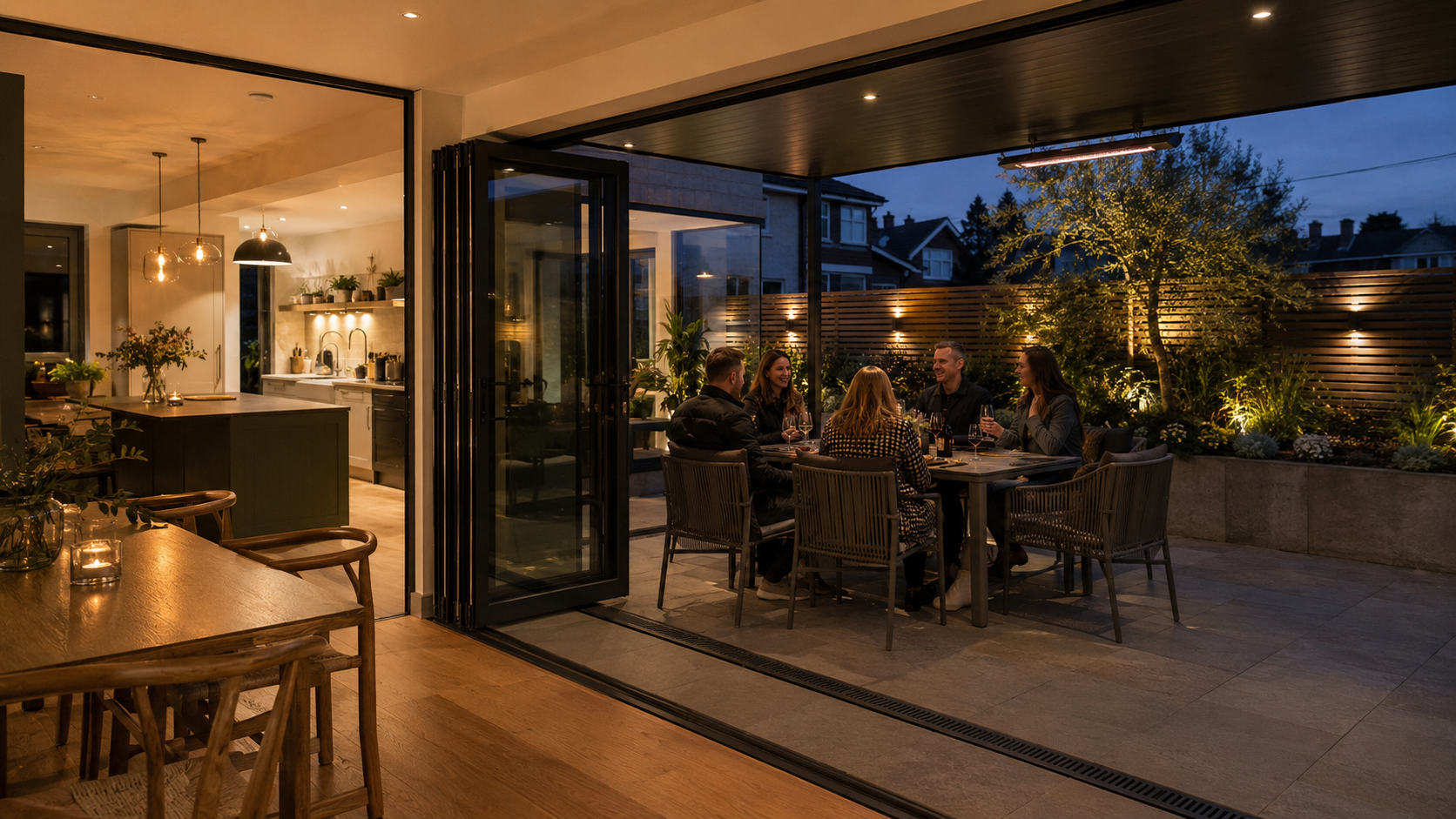
Outdoor lighting should feel like a continuation of the interior scheme rather than something separate. Wall lights near the doors, subtle pathway lighting, and warm garden spotlights can all help blur the line between inside and out.
One particularly effective approach is to align lighting levels. If your kitchen has warm, soft lighting in the evening, harsh cold outdoor lighting will break the illusion instantly. Keeping colour temperature consistent helps maintain that seamless feel.
Outdoor Cooking Areas And Visual Continuity
If you really want to push the concept further, an outdoor cooking or dining area can turn the garden into a true extension of the kitchen.
This doesn’t have to mean a full outdoor kitchen setup (although those are becoming more popular). Even a simple built-in BBQ area or prep surface can make a huge difference to how the space functions.
The key is visual continuity. Matching materials—such as stone, timber, or metal finishes—helps tie the outdoor cooking zone back to the interior kitchen design. When done well, it feels like both spaces were designed together from the start.
Storage and layout also matter. Keeping outdoor essentials close to the house entrance makes the transition feel effortless. The less “back and forth” required, the more natural the flow feels.
Bringing It All Together
Creating a seamless kitchen-to-garden flow isn’t about one dramatic design feature. It’s about a combination of small, thoughtful decisions that work together.
Bifold windows make everyday tasks more enjoyable. Corner glazing opens up entire walls. Flooring and lighting tie the spaces together visually. And layout choices ensure the garden isn’t treated as a separate destination, but as a natural extension of the home.
When all these elements come together, the result is more than just a nice-looking kitchen. It’s a space that genuinely changes how you live in your home—making everyday moments feel more open, connected, and effortless.
Categories: Uncategorised