How To Make A Small Garden Feel Bigger With The Right Windows And Doors
Maximising the perception of space in a small garden is an art that blends architecture, interior design, and landscaping. One of the most powerful tools at your disposal is the careful selection and placement of windows and doors.
By considering frame colour, glazing proportions, door styles, and lighting, you can create a sense of openness and continuity, blurring the lines between indoor and outdoor spaces.
Let’s take a closer look.
Frame Colour Impact On Perception
The colour of your window and door frames significantly affects how a space is perceived. Light or neutral-toned frames tend to recede visually, allowing the eye to flow seamlessly between the interior and exterior. This can make a compact garden feel more expansive.
Conversely, darker frames create a bold visual boundary, which can be beautiful in larger spaces but may make a small garden feel enclosed. For a sense of continuity, consider colours that echo exterior finishes, paving, or planting schemes. Subtle matching or complementary hues allow your garden to become an extension of your home rather than a confined area.
Maximising Glass-to-Frame Ratio
The proportion of glass relative to the frame—often called the glass-to-frame ratio—directly influences how spacious a garden feels. Larger panes of uninterrupted glass draw the eye outward and allow more daylight to penetrate the interior.
For small gardens, frameless or minimal-frame windows are particularly effective. They create a seamless visual connection and reduce the visual obstruction that traditional, heavily framed windows can introduce. By increasing the glass-to-frame ratio, the garden is allowed to dominate the view, tricking the eye into perceiving a larger, more continuous outdoor space.
Aligning Door Placement With Garden Focal Points
Strategic door placement is another essential consideration. Positioning doors to align with key garden features—such as a central flower bed, water feature, or decorative sculpture—creates intentional sightlines that guide the eye through the space.
These visual corridors create the impression of depth, drawing attention away from boundaries and making the garden feel more expansive. French doors or bi-folding doors can frame these focal points elegantly, turning the transition between indoor and outdoor spaces into a curated experience rather than a mere exit.
Using Sliding Doors For Uninterrupted Views
Sliding doors are ideal for small gardens because they open up the entire width of an opening without swinging into the room. This provides uninterrupted views and a direct visual extension of the interior living area into the garden.
Modern aluminium or UPVC sliding doors offer slimline frames and floor-to-ceiling glazing, maximising both light and sightlines. For smaller gardens, this approach reduces visual clutter, increases natural light, and enhances the perception of spaciousness. Additionally, sliding doors encourage practical connectivity, making patios and decks feel like natural extensions of your home.
Creating Symmetry
Symmetry in window and door placement can also enhance the sense of space. Balanced designs—where windows mirror each other on opposite walls or doors align with windows—create visual harmony and order.
This symmetry tricks the eye into perceiving a larger, more organised space. For example, a central sliding door flanked by matching tall windows can create a sense of continuity and proportion, while also framing the garden in a visually appealing manner. Even in a compact garden, symmetry creates a structured, expansive feel that elevates the overall design aesthetic.
Lighting For Evening Illusion
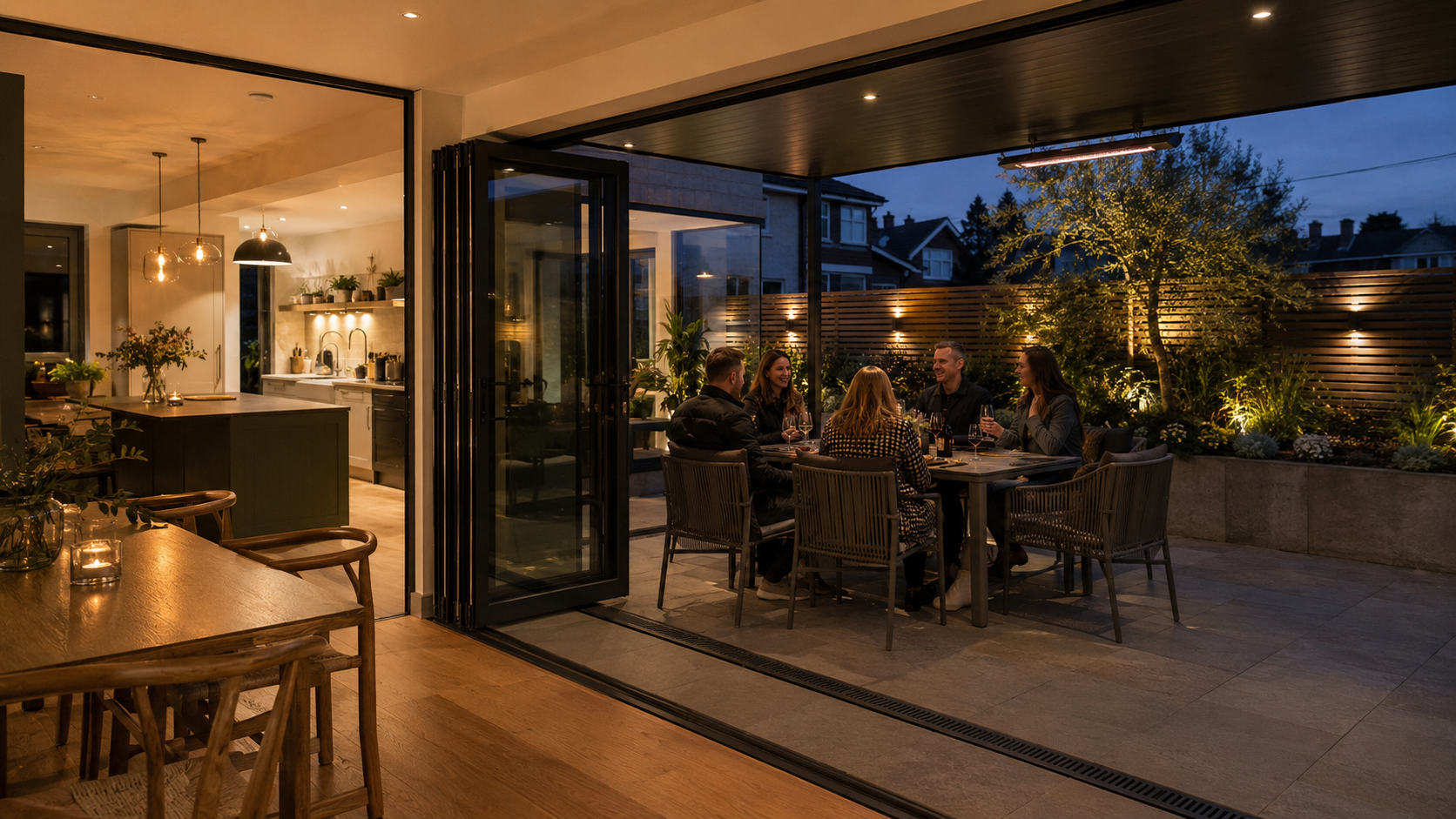
Daylight is a key factor in spatial perception, but small gardens also benefit from strategic lighting after dark. Exterior lights along pathways, uplighting on trees or hedges, and interior ambient lighting shining through large windows and doors can extend visual boundaries.
Well-placed lights create the illusion of depth and highlight features that draw the eye outward. This approach not only improves the usability of your garden in the evenings but also enhances the perception of size. Windows and glass doors act as frames for this illuminated view, making the garden feel more integrated with the home and more expansive even when natural light fades.
By carefully considering frame colour, glass proportions, door alignment, style, symmetry, and lighting, you can make a small garden feel far larger than its actual footprint. Large panes, minimal frames, and strategic placement allow the eye to move effortlessly between indoor and outdoor areas. Sliding doors offer uninterrupted sightlines, while symmetry and focal points create depth and harmony. Evening lighting ensures that the garden continues to feel spacious long after the sun sets.
Enhancing Your Space, Inside And Out
Ultimately, the right windows and doors transform a compact garden from a limited outdoor area into a seamless extension of your living space. This approach enhances both functionality and aesthetics, creating an environment that feels open, bright, and inviting. Even the smallest garden can achieve the impression of a larger, more connected landscape with careful planning and design.
By investing in thoughtful window and door solutions, homeowners can enjoy a garden that feels expansive, integrated, and alive – proving that size isn’t the defining factor, but rather the quality of the connection between indoors and outdoors.
Categories: Uncategorised