Creating A Social Kitchen With Indoor-Outdoor Entertaining In Mind
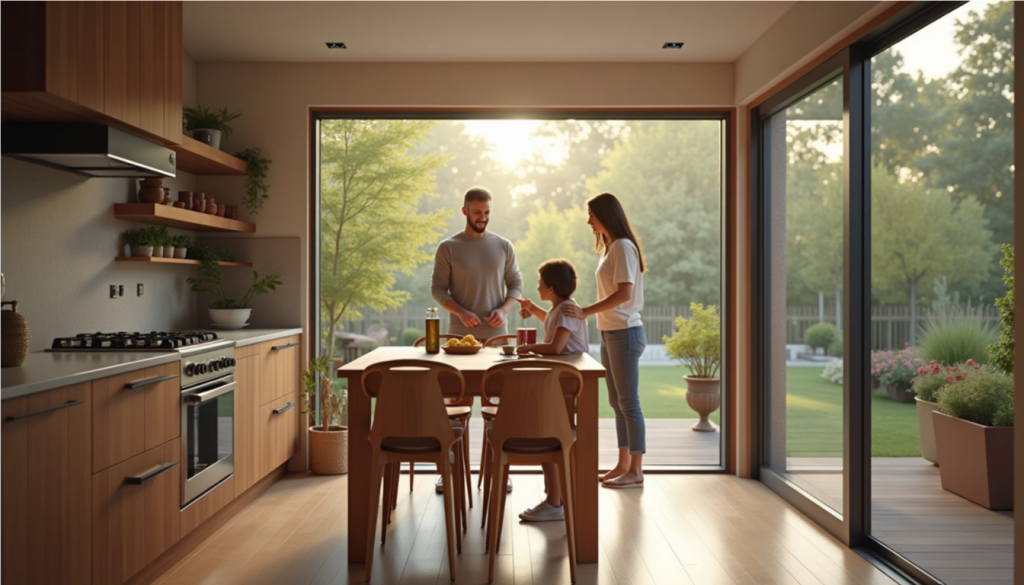
The kitchen isn’t just a space for cooking; it is the heart of the home, where families gather, guests mingle, and daily routines intersect. Designing a kitchen with indoor-outdoor entertaining in mind allows the space to function naturally as a social hub. It ensures that the connection to the garden or patio enhances both lifestyle and convenience.
Thoughtful design considers not only how the kitchen looks but also how people move through it. By prioritising interaction and accessibility, the kitchen becomes a space where indoor and outdoor areas are united.
Let’s take a closer look at how to achieve this.
Bifold Serving Windows And Breakfast Bars
Bifold serving windows are a practical way to bring the outdoors into daily life. Positioned above a counter or integrated into the kitchen wall, they open wide to allow easy service of food and drinks directly to an outdoor seating area. This encourages interaction between indoor and outdoor spaces, keeping conversations flowing even while food is being prepared.
Pairing bifold windows with a breakfast bar or internal counter encourages informal gathering. Guests can chat and observe activity in the kitchen without crowding the worktop, creating a dynamic social space that works for casual meals or entertaining.
Open-Plan Layouts Flowing Into Patios
Open-plan kitchen layouts amplify the sense of connection with the garden. Removing barriers and aligning the kitchen with patio doors or large glazing creates an unbroken visual link between inside and outside. This allows guests and family members to move freely, giving the home a more expansive and cohesive feel.
Continuity between flooring inside and outside can reinforce this connection. Large windows or sliding doors maintain sightlines and keep the garden visible even when doors are closed. Strategic furniture placement ensures that the space functions for both daily life and entertaining, offering flexibility in how the area is used.
BBQ Areas Aligned With Kitchen Positioning
For homes that incorporate outdoor cooking, the location of the barbecue relative to the kitchen is key. Aligning outdoor cooking areas with kitchen openings reduces unnecessary steps and keeps hosts connected to guests during gatherings. From the island or sink, sightlines to the barbecue allow smooth coordination of meal preparation.
Incorporating a nearby prep area or counter outside creates a functional extension of the kitchen. This arrangement ensures that both indoor and outdoor cooking zones are practical and visually connected, making entertaining more efficient.
Durable Materials For High-Usage Areas
Indoor-outdoor kitchens experience significant wear and tear – particularly during social gatherings – so choosing materials that can withstand wear and tear is essential. Flooring, thresholds, and work surfaces should be resilient and easy to maintain.
Inside, porcelain tiles, stone, or engineered timber provide durability while complementing the kitchen’s design. Outside, slip-resistant paving ensures safety and longevity. Low-profile transitions between indoor and outdoor spaces maintain accessibility and reduce wear, helping the kitchen remain functional over time.
Lighting For Evening Entertaining
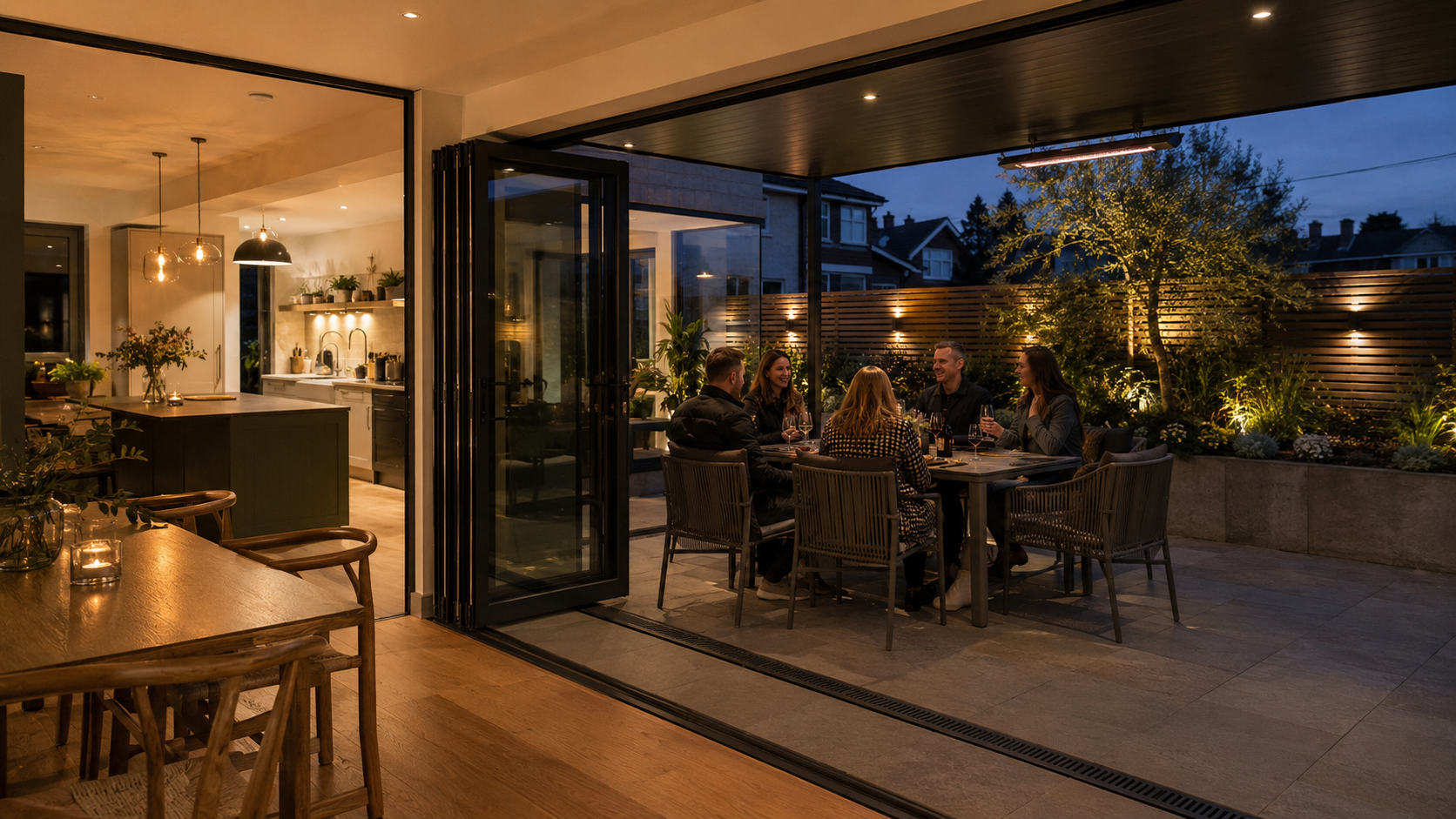
Lighting plays a critical role in making a social kitchen versatile. A combination of task, ambient, and accent lighting allows the space to transition from cooking to evening entertaining smoothly. Pendant lights above islands or breakfast bars create focus, while under-cabinet lighting supports meal preparation.
Outside, well-planned patio lighting, wall-mounted fixtures, or subtle garden uplighting extends usability into the evening. Balanced lighting between indoor and outdoor areas ensures the garden remains visible, encouraging natural movement and maintaining the social atmosphere.
Designing For Families Versus Party-Friendly Homes
The way a kitchen is used influences its design priorities. Family-oriented kitchens often focus on supervision, storage, and practicality. Islands or counters with seating keep children close while meals are prepared, and clear sightlines to the garden support outdoor play.
In homes designed for hosting larger groups, priorities shift toward flexible seating, larger islands, and adaptable outdoor furniture. Space zoning becomes important to prevent congestion and ensure guests can circulate comfortably.
In both scenarios, maintaining a balance between function and social interaction is key. Well-thought-out layouts, defined zones, and efficient storage allow the kitchen to accommodate both everyday life and larger gatherings.
Building A Kitchen That Connects Indoors And Outdoors
A kitchen designed for indoor-outdoor entertaining transforms how a home is used. Bifold serving windows, open-plan layouts, and aligned barbecue areas encourage interaction, while durable materials and thoughtful lighting make the space practical and welcoming at all times.
By considering the needs of families, hosts, and daily routines, the kitchen can become a true social hub. Aligning layout and garden access allows seamless movement between indoor and outdoor spaces, enhancing both usability and enjoyment.
If you are planning a renovation or extension, focus on how the kitchen interacts with the garden. With careful design, your kitchen can become the central space for meals, conversation, and socialising, extending your living space into the outdoors.
Categories: Uncategorised